

Recently, Allan Chochinov gave a talk at Emily Carr University in which he used a word I can't shake: Fluency.
During his talk, he suggested that fluency was a skill that designers needed to exercise. We often associate fluency with travels to a foreign land. If I can acquire some key phrases like "Where is the toilet?" or "How much does this cost?" then I feel more comfortable making my way in an unknown environment.
Translate this idea to the design space and one could suggest that a designer needs to be fluent in their particular craft, process or software. While this is part of it, the kind of fluency I'm curious to uncover is the kind that I need when I'm travelling in a foreign land of business. Or health care. Or politics.
I wrote about this idea awhile ago in considering how design education could influence one's fluency. But I don't believe we should rely on educators alone. As I've stepped away from school and into the business, health care or non-profit sectors, I've experienced my own need for language and insight as I worked alongside these other disciplines. In many cases, we might be talking about the same thing but we often find ourselves using different terms and this simple nuance can cause much confusion and frustration (especially when it comes to the journey from idea to outcome/process to deliverable).
Maggie Breslin is a senior designer/researcher in the Center for Innovation at Mayo Clinic. In one talk, she identified herself a junior doctor with the amount of learning she had acquired after working for four years in this self-pioneered role at Mayo.
Derek Miller is the director of Policy Lab and is participating in a variety of activities and research around the implementation of design into public policy. In a recent email exchange he said,
It is barely on the radar screens of the public policy world yet, and while development work has contracted designers to come up with physical solutions to things, the notion of design as a process — and the area of service design itself, for example — is entirely alien.
These two scenarios suggest that designers do have a role to play in other spheres but in order to move design beyond the "alien" or physical solutions, one must acquire the ability to converse articulately on the issues involved in these realms.
So this begs the question, "If design can play a role in these "other lands," how can designers become more fluent so as to make an effective impact?"
What do you think needs to happen for new designers/students? And what about people with years of experience who are seeking to contribute their design in other spheres like health care, public policy or international development?
How do we become fluent?
03 April 2011
The New Language of Design


31 March 2011
An Ode To Common Things


I have a crazy,
crazy love of things.
I like pliers,
and scissors.
I love
cups,
rings,
and bowls -
not to speak, of course,
of hats.
I love
all things,
not just
the grandest,
also
the
infinite-
ly
small -
thimbles,
spurs,
plates,
and flower vases.
Oh yes,
the planet
is sublime!
It’s full of pipes
weaving
hand-held
through tobacco smoke,
and keys
and salt shakers -
everything,
I mean,
that is made
by the hand of man, every little thing:
shapely shoes,
and fabric,
and each new
bloodless birth
of gold,
eyeglasses
carpenter’s nails,
brushes,
clocks, compasses,
coins, and the so-soft
softness of chairs.
Mankind has
built
oh so many
perfect
things!
Built them of wool
and of wood,
of glass and
of rope:
remarkable
tables,
ships, and stairways.
I love
all
things,
not because they are
passionate
or sweet-smelling
but because,
I don’t know,
because
this ocean is yours,
and mine;
these buttons
and wheels
and little
forgotten
treasures,
fans upon
whose feathers
love has scattered
its blossoms
glasses, knives and
scissors -
all bear
the trace
of someone’s fingers
on their handle or surface,
the trace of a distant hand
lost
in the depths of forgetfulness.
I pause in houses,
streets and
elevators
touching things,
identifying objects
that I secretly covet;
this one because it rings,
that one because
it’s as soft
as the softness of a woman’s hip,
that one there for its deep-sea color,
and that one for its velvet feel.
O irrevocable
river
of things:
no one can say
that I loved
only
fish,
or the plants of the jungle and the field,
that I loved
only
those things that leap and climb, desire, and survive.
It’s not true:
many things conspired
to tell me the whole story.
Not only did they touch me,
or my hand touched them:
they were
so close
that they were a part
of my being,
they were so alive with me
that they lived half my life
and will die half my death.
Pablo Neruda
13 March 2011
An Interactive Sketchbook

As I created my sketchbook for the Art House Coop's Sketchbook Project, I wanted to include an aspect of interactivity in it.
I'm pleased to report that someone has contributed an idea to my search for a typographic tattoo! I now have the addition of Lubalin's ampersand (centre image). And ironically, it happened during the South by Southwest Interactive festival.
If you live in any of the cities included on the tour, please take some time to check my book out (and contribute)!
Photos courtesy of Zach Bulick
10 March 2011
Design Thinking de Bono style

The main difficulty of thinking is confusion. We try to do too much at once. Emotions, information, logic, hope and creativity all crowd in on us.
Western thinking is concerned with "what is," which is determined by analysis, judgment and argument...but there is a whole other aspect of thinking that is concerned with "what can be," which involves constructive thinking, creative thinking and "designing a way forward."
-Edward de Bono
---
I am currently reading de Bono's Six Thinking Hats and today used it as a method for students to work through the various layers of problems they wanted to solve in their communities.
The great thing about this process? Because you aren't thinking in multiple directions you are less likely to get lost in the complexity of an issue. By focusing on a common way for everyone to think about a topic or concern, you can avoid frustration and enable a group of people to come to the table on equal footing.
As we worked through an issue, I asked them to all think about it by focusing on one way of thinking at a time. Here are the colors/hats and the corresponding ways of thinking:
White Hat: neutral, objective, facts, figures
Red Hat: emotional view
Black Hat: cautious, careful, points out the weakness of the idea
Yellow Hat: positive, optimistic, hopeful
Green Hat: creativity, new ideas
Blue Hat: control, organization of thinking process
It was fun to watch the groups attempt to keep focused on one particular type of thinking and not default to what may have been more familiar or comfortable. Through this experience, I was reminded how these other systems/tools of thinking can be useful in breaking down barriers with multidisciplinary teams, which is common when working in research or social impact design spaces.
03 March 2011

I'm going to be talking about my work in Rwanda with the chair of the IDSA Design For The Majority section. Feel free to listen in!
02 March 2011
Brainstorm 101


Designing Social Change kicked off last night and because of the diversity of backgrounds and experiences, I like to start the course with an exercise where we engage divergent thinking when approaching a problem we want to solve (instead of defaulting to our typical convergent posture). In this case, we sought to re-imagine common objects. Before we look to tackle something more intensive, we want to be sure we have the ability to frame something that is a little less complex. For this class, it was a Ziploc bag, a fork, chopsticks and a bulldog clip.
To facilitate this process, I draw on the resources of IDEO (and the d.school) to help students brainstorm in a new way:
#1 Defer judgment: there are no bad ideas at this point because there's plenty of time to judge after
#2 Encourage wild ideas: it's the wild ideas that often provide the breakthroughs and we can always bring ideas down to earth later, we need new paths for non obvious ideas
#3 Build on the ideas of others: think 'and' rather than 'but'
#4 Stay focused on topic: you get better output if everyone is disciplined
#5 One conversation at a time: that way all ideas can be heard and built upon
#6 Be visual: sometimes a picture really can speak a thousand words
#7 Go for quantity, not quality: set an outrageous goal and surpass it!
We also had a virtual guest! Tim Brown's TED Talk is a lovely way to introduce the ideas of design thinking to a multi-disciplinary team.
24 January 2011

I introduced my Design One class to the work of Richard Serra today. He has a list of verbs that he has developed and he aims to enact these verbs in his work.
We had a warm up sketch session and then I asked them to see if they could translate one of their sketched ideas into a larger scale version by using a different material: yarn and pins. We went around the room to see if people could identify what each "sketch" meant. And we wanted to ask the interwebs to also review the work and let us know what they see.
Can you tell what each of the above images represent (please post in the comments)? Here is part of Serra's list to help you along:
to roll
to crease
to fold
to store
to bend
to shorten
to twist
to shave
to tear
to chip
to split
to cut
to sever
to drop
to remove
to simplify
to differ
to disarrange
to open
to mix
to splash
to knot
to spill
to droop
to flow
to curve
to lift
to inlay
to impress
to fire
to flood
to smear
to rotate
to swirl
to support
to hook
to suspend
to spread
to hang
to collect
to grasp
to tighten
to bundle
to heap
to gather
to scatter
to discard
to pair
to distribute
to compliment
to enclose
to surround
to encircle
to hole
to cover
to wrap
to dig
to tie
to bind
to weave
to join
to match
to bond
to hinge
to mark
to expand
to dilute
to light
to stretch
to bounce
to erase
to force
to continue
13 January 2011

Students in my Ecological Perspectives in Design seminar were given the chance to contemplate what they want to know about "sustainability" as it relates to design. As this is a required course, I did a quick read to find out how many people really wanted to be in the class. Today's stats revealed a fairly even split between "no desire" and "keen." The point of this session was to allow students to remain essentially anonymous in their uncertainties about this complex topic and highlight areas that are likely important to them but continue to remain ambiguous.
Here's the list (taken from all their Post-its). We're going to revisit these at the end of the term to find out what assumptions were shaken and what new learning arose. Don't we all struggle with answers to some of these?
THINGS I WANT TO KNOW
Can markets survive without importing/exporting?
Why do some designers/people not feel sustainability is important?
If everyone were to consume 90% less of natural resources, how many jobs would be lost?
Where does our garbage go?
What have designers done to improve environmental circumstances?
How to approach non-designers and teach them about sustainability?
If the world's population keeps growing, will we run out of food?
What is happening to 95% of the drinkable water in Canada?
How can we push past economic concerns to focus on environmental?
How do designers get more information about what kind of sustainable/non-sustainable products/materials are being used currently?
Why do kids continue to die from starvation and how can designers help reduce this?
Have the precautions people are taking been enough of a change to see improvement in the environment?
What materials are good for the environment?
Why do we think so lightly about this topic?
Why do some feel the need to be rebellious toward the environmental movement?
How can I cooperate with the environment through CD?
How can we design sustainably as graphic designers and be successful at it when the industry is so reliant on non-sustainable items? (a few of these)
What will happen to our landfills in the future?
Why are we talking about this now?
Is the earth meant to last forever considering everything eventually dies?
What is being done in Canada in the design world as it relates to this issue?
More solutions than just recycling and using less water.
Factual statistics about what we take for granted (eg. paper vs. plastic)
What is an example of something sustainable?
Who are the worst offenders?
What is the most dangerous thing we can do to our planet?
Is this subject only talked about at ECUAD? Are other universities talking about this subject?
Is there a formula to find the truth?
Learn about the process of going green
Why hasn't the Canadian govt banned the use of plastic bags yet?
What comes after sustainable design? What does the future look like?
How can we package products with the intent of sustainable design?
More about the garment industry
How long do we have?
How can we hit the 90% (reduced consumption)?
More strategies to educate the public.
How to solve the rise in gas prices?
What will it take for people to realize what is needed?
How much money is spent annually trying to be sustainable?
What can I learn and put into practice everyday that can help me make a positive ecological difference?
Is there a silver lining and how can I find it?
Environmental impact measurements
How can we convince politics that becoming a sustainable country has huge economic potential?
THINGS I ALREADY KNOW
Polar bears are homeless
Styrofoam takes like a billion years to decompose
There is a crazy amount of plastic in the world
I like to buy new stuff
There are islands being created from plastic yet we are still making things with plastic
It's cheaper to make things without thinking about the environment
It's getting hot in here
I'm pretty ignorant about the facts
The basics: recycling and moderate use of water
Sustainable design is systems thinking
BC's economy is entirely based on unsustainable resource extraction
If humans disappeared from the planet other forms of life would flourish
Cars pollute
Big changes can be made by forming small habits
Canada is doing poorly with sustainability on a global scale
Local is usually better
The ice caps are melting
After reading this, I'm reminded that we all have the potential to exist with assumptions and this can hinder our ability to be open to innovations or better ways of doing things. The education space offers the room to challenge with less fear of repercussion.
My other favorite bit? Asking students to take the #2011awesome ball and share what they hoped for this year. I was touched by both the humor and intentionality many revealed:
Forgive people who I haven't
Become a stronger person
Bike across BC
Learn to sew and take flamenco dance lessons
Cook something instead of eating pizza
Work on one pack in my six pack
Live more consciously
Photo credit: Teux Deux
16 December 2010

The Stick To It Award
A piece of driftwood from the shores of the Baltic Sea made the perfect icon to create an award that I gave to Sam Carter of Emily Carr University. After 36 years of teaching, he is retiring and his contributions to education and the creative community are significant.
In short, he has continued to live his life by sticking to it.
Because Sam is also very globally minded, having this wood come from another part of the world also held meaning for me. He has a great love of other cultures and materials so driftwood seemed like a perfect fit. Who knew driftwood could do all of this?
[It] provides shelter and food for birds, fish and other aquatic species as it floats in the ocean. Gribbles, shipworms and bacteria decompose the wood and gradually turn it into nutrients that are reintroduced to the food web. Sometimes, the partially decomposed wood washes ashore, where it also shelters birds, plants, and other species. Driftwood can become the foundation for sand dunes."
(Wikipedia)
Douglas Coupland reflected on Sam's influence and shared that he owed him his life.
Sam, like the driftwood, provides a space for others to be sheltered and nourished. And because of this, I realize that I now want to be on the lookout for other reasons to give this award. There is nothing more powerful than meeting someone who lives their life to give it away. So don't be surprised if you find me combing the beaches of the world hunting for more sticks of driftwood. Because we need more like Sam who live it to stick to it.
12 December 2010

This image represents my thoughts on how design can act as a conduit for conversation and collaboration (especially when working in contexts/cultures that are unfamiliar). The expert mindset can reduce the opportunity for sustainable solutions. And the expert posture assumes we've nothing to learn from others.
Conversely, when we aim to design a solution or service together, we have the opportunity to imagine alternate possibilities and in turn apply some of these learnings in other environments.
I've put the continent of Africa in my diagram because of how my design work in Rwanda has influenced my ideas on the topic significantly. But I wouldn't limit these notions to what is often perceived as design "over there" or "for development." There is great potential for this way of working to be applied in my own backyard.
This image has been included in this discussion if you have more interest in the topic:
Aid as a conversation between cultures
05 December 2010
GOOD DESIGN IS GOOD CITIZENSHIP
When Milton Glaser was illustrating Dante's Purgatory, he become interested in the "Road to Hell" and developed a little questionnaire to see where he stood in terms of his own willingness to lie. Beginning with fairly minor misdemeanors, the following twelve steps increase to some major indiscretions.
1. Designing a package to look bigger on the shelf.
2. Designing an ad for a slow, boring film to make it seem like a light-hearted comedy.
3. Designing a crest for a new vineyard to suggest that it has been in business for a long time.
4. Designing a jacket for a book whose sexual content you find personally repellent.
5. Designing a medal using steel from the World Trade Center to be sold as a profit-making souvenir of September 11.
6. Designing an advertising campaign for a company with a history of known discrimination in minority hiring.
7. Designing a package for children whose contents you know are low in nutrition value and high in sugar content.
8. Designing a line of T-shirts for a manufacturer that employs child labor.
9. Designing a promotion for a diet product that you know doesn't work.
10. Designing an ad for a political candidate whose policies you believe would be harmful to the general public.
11. Designing a brochure for an SUV that turned over frequently in emergency conditions and was known to have killed 150 people.
12. Designing an ad for a product whose frequent use could result in the user's death.
(excerpt from Steven Heller on DT&G Interviews)
If you enjoyed this, you might like his Ten Things I Have Learned essay.
30 November 2010

"While the first generation of publications on green design were 'how to do it' guides, written quickly to meet the demand for basic information, the next generation of publications in the 1990s is likely to be more considered and carefully researched, more critical and synergistic, more aware of the full complexity of design and sustainable development in both the developed and developing worlds."
Pauline Madge, 1993
Pictured: The Green Book, 2007
28 November 2010

I got to attend my first TEDxVancouver event and was super impressed by the professionalism and organization that was evident from the moment you entered Kay Meek Centre. Stellar swag, truly tangible interactions and like minded TEDsters made it a day well spent.
These are 5 talks I'd love to revisit:
Josh Fox: Using the banjo to complement a narrative while talking = awesome, skills
Michael Green: Visualizing world housing needs = making information accessible and relevant
FYI: MGB is the firm that made the awesome 5500+ books-changing room space at LYNNsteven
Nardwuar: Crowd surfing to end your talk = using a metaphor to encapsulate your message
Dr. Jack Horner: Science lesson turned into story = reframing education
Rives: Linking history by filtering it through the 4am time slot = brilliant
Bonus track: Mash up by Don Alder and Kyprios
(photo by Kris Krüg)
19 November 2010
Imagine inviting some of your city officials to an amazing dinner. The table cloth, instead of being a mere accessory to beautify the event, becomes a place to actively dialogue with those around you. While you eat, you are visualizing the conversations presented to you on the table cloth.
Could this be a new alternative to local democratic exchange? If Obama can have a state dinner, could the local community do the same and address issues over a meal? We may not have a presidential budget but each community will have vendors who would likely benefit from the opportunity to be included in such an undertaking.
18 November 2010

Because they chose design, some students had hoped that they could leave the writing bit behind. And it is because of this perception that I spend a portion of my day talking to them about the value of writing. Specifically, how to write critically. And I try to demonstrate how this skill correlates to their make/build practice. I do this by drawing a stool: if one part is missing, the whole thing topples.
Here's how I break it down:
IDEA: You should start with an idea. You may have to research to refine this but once you have a question you are responding to or an idea you're going to develop, you have the ability to stay focused and build a paper that people can understand and engage in. The rest of the paper should support this idea.
RESEARCH: An idea gets supported and developed through research. While you may think your ideas are brilliant, someone else has likely considered it on some level. Using their ideas can help bolster your argument but it should be used as a support rather than the primary focus. Be sure to cite it!
CRITICAL THOUGHT: To avoid regurgitating other people's ideas (and plagiarism), take some time to reflect and consider how you might add your commentary to the subject. What is your posture on the topic? What would you do/say differently? Many designers have built stools but when adding their personal reflection to the content, a new stool gets developed.
STORY: Give us a picture or example that helps us relate to the idea in a tangible way. A metaphor or analogy can help but this is by no means the exclusive way to present a story. In some cases, you can add a sketch or diagram to help support your words. In design, this helps a user imagine how they might use your product. In writing, it helps me understand how I might fit into the topic you're discussing.
On top of all this, proper grammar, spelling and sentence structure will only help your cause. These elements could be compared to the nails or joints that help hold the stool together. If you don't use them, you end with individual parts that don't make sense because they don't join together.
I also remind them that design, like writing, only gets better with various iterations and critiques. Inviting others to look at your work is a good way to improve it.
I'd add writing skills to my ongoing list of designer tools:
1. Camera
2. Self-awareness
3. Drawing skills/tools
08 November 2010

Awhile ago, I started a series of posts about what I thought a new designer should consider acquiring and/or developing in their toolkit. Here's the list so far:
1. Camera
2. Self-awareness
Clearly, I've been a bit delayed but the idea of the toolkit hasn't left me so let's continue.
Next on the list? I'd propose this: Learn how to draw.
While this may seem obvious, I am regularly reminded of how many designers or design students actually don't practice this (and some even have a fear of it). My suggestion to overcoming this? Carry some tools with you so that you can pursue it daily. I don't say this as one who has achieved it (the above image is a drawing I did of a Sharpie pen with my less dominant hand in 2005) but rather as one who has learned that in order to visualize information for people I need to be able to show rather than tell them what I am thinking. Ideas and outcomes don't start on the computer so honing this ability to display concepts will only serve to help you with your work. I was reminded of this today when I listened to this excerpt from a Saul Bass documentary.
Because I needed to be challenged in this area, I took up the Sketchbook Project as a means to remind myself that like learning a new language or any other creative skill, you typically don't just wake up with it. You have to nurture and develop it in order to look back and see some measure of breakthrough. Have you ever heard of Morning Pages? They are a great example of how regular process can help break through some of the clutter. I'd propose the same concept for designers and suggest that the pages are about visuals over text.
And sometimes, it comes down to making sure you are prepared at any given moment. Here are some items that I don't leave home without:
Pens:
Sharpie
Muji (thank you Michael Surtees)
Pilot
Notebooks:
Moleskine
Field Notes
Spaces For Ideas
And if you need more evidence, watch to this great video where Milton Glaser talks about the importance of drawing.
01 November 2010

I recall my first read of How To Be A Graphic Designer Without Losing Your Soul. I was still in design school and on the hunt for justifiable reasons as to why I'd decided to incur more debt in order to shift my career toward graphic design. I recall at the time that I found much solace in the content.
Five years on, Adrian Shaughnessy presents a second edition that has kept its first edition forward by Stefan Sagmeister, which could still hold true today: Graphic design is becoming a wider discipline and is therefore more difficult.
As one who has pursued some of these "wider aspects" since the first edition, I was appreciative of his inquiry into what graphic design is today. Topics in this section include: the changing definition of design, social design, design thinking and ethics (to name a few). While Shaughnessy does not neglect the fundamental questions asked in the first book, he provides a fair assessment of the current state of affairs that is in keeping with the inquiry that many designers are also asking, regardless of discipline. In fact, one wonders if the word "graphic" needed to be included at all.
Shaughnessy acknowledges his fixation with "the look of things" and seemingly laments that our current focus on matters of social consequence may be lacking a certain visual sensibility. I think he makes a fair case about its value but would argue that today many are interacting with a diverse global community that may translate such sensibilities in different ways. Especially when the issues of design aren't about the look of things but rather the survival of things.
Consider a country in crisis: Haiti. Post-earthquake, the look of things becomes seemingly less important because the transmission of accurate information is paramount. A great case study to illustrate this concept:
Three Emily Carr University students were asked by the Red Cross to develop graphical instructions on how to use tablets to purify water. Because these tablets look like pills, the students had to consider how they would ensure that they were used properly (i.e. not ingested). With a critical time line and important message to communicate, I don't think these students were thinking about whether the design was going to be dull or not. Because in this case (and many others), the message actually does matter. And I believe this type of scenario has the potential to become more prevalent in the design community as we consider climate and environmental issues, financial and political markets and our global connectedness to both.
Regardless, one can hope that the future will allow room for a blend of both substance and style and that this becomes a reasonable standard for all designers. In the meantime, maybe being a graphic designer today means that we might be given the chance to save a soul (or two) beyond our own.
BOOK INFO
Title: How To Be A Graphic Designer Without Losing Your Soul, New Edition
Author: Adrian Shaughnessy
Publisher: Princeton Architectural Press
Thanks to Michael Surtees for sharing this review copy with me!
15 October 2010

If you haven't already, check out OpenIDEO:
To become a place where good ideas gain momentum, OpenIDEO depends on participation — your inspirations, his comments, her concepts, our design process. It's these efforts, these big and small moments of sharing and collaboration, that make this platform a dynamic resource for tackling significant global challenges.
The challenge I participated in is now complete and ten final ideas were selected that the partners will seek to implement.
You can download the challenge catalogue to see the 40 shortlisted ideas that emerged during the Affordable Learning Tools and Services Challenge. You also get bonus worksheets that can help you apply a similar process to your own work.
20 September 2010
 I'm experimenting with the idea of an "adaptive syllabus" this year.
Fear not. I haven't removed the basic required course outline, but I've warned my students that things may shift and that they should be prepared to be adaptable. This isn't an experiment with their education but rather an investigation of how learning can be adapted when we embrace the unexpected (which always happens in classes but is rarely documented or monitored, from my experience).
Imagine a wall in a classroom where a student could make comments using a colored marker or post-it. Imagine weekly assignments getting shifted as needed. Imagine new ideas emerging because of real time experiences that a student or a teacher are curious to explore. If industry operates this way, shouldn't design education address it in some manner? If the design of things, ideas, products and software are meant to be agile, then shouldn't a design education promote the same model? Once you enter the daily reality of work, you find yourself getting interrupted for meetings, conference calls and site visits, which suggests another level of agility. The reality is, you have to shift. So I suppose I'm asking, "What if a course syllabus operated in the same manner?"
I don't profess to have a full grasp on this idea but I like the concept that a course outline has the potential for some interactivity and can mimic the realities of industry. I think it could be developed into a digital tool that would enable a student to interact with it before/during/after class (since I don't have a fixed space at ECU to allow for an analog interpretation, I'm hosting a one-sided test here). The image above simply highlights a framework but hardly represents the full experience of interactivity. Any interaction designers want to help me test the idea? #wink
I'm sure some instructors wouldn't enjoy this format so I'm hardly declaring it as the new way to develop a syllabus. But from watching the folks at the d.School and Hyper Island, I can see that there is definitely room for alternative methods of course development - and some that pursue interactivity at the same pace as industry.
Since this is a new concept for me, I'd love to hear your thoughts on this topic (whether you're a student, an instructor or an industry professional).
15 September 2010

I've been crafting a list of tools as I consider how I might support individuals who are new to design. Since I'm teaching undergraduates this fall, this inquiry has become even more relevant. Many students are worried that they aren't taking the right path and fear that they might make a mistake in their education/career choices. Haven't we all? In my estimation, some of this stems from the temptation to compare oneself to another and assume that in order to be a good designer, I need to be like ______________.
In light of this, I reflected back on my own journey and asked myself how I got to the place I am today. Looking back, I can't underestimate the value of knowing the often overlooked skills that don't fit into a typical "list of tools." The reason? They are unique to each individual! While I am a proponent of developing and nurturing one's craft, there is also great value in actually knowing and identifying your strengths.
In the words of Socrates: Know thyself.
Some might classify these as "soft skills" but I would suggest they are fundamental to developing your toolkit. And since design operates as a collaborative discipline, understanding strengths can help build strong and effective teams.
I went back to some notes and readings from my own search and came across a few tools that have helped me frame these "soft skills" for myself and others. They may be obvious options but in re-reading them, I was encouraged by the direction my work/life/career has taken.
1. StrengthsFinder
StrengthsFinder proposes that we should reduce the amount of time we spend worrying about what we aren't good at and instead nurture what already comes naturally. Here are my top 5 strengths discovered in this process:
a) Ideation
People who are especially talented in the Ideation theme are fascinated by ideas. They are able to find connections between seemingly disparate phenomena.
b) Connectedness
People who are especially talented in the Connectedness theme have faith in the links between all things. They believe there are few coincidences and that almost every event has a reason.
c) Strategic
People who are especially talented in the Strategic theme create alternative ways to proceed. Faced with any given scenario, they can quickly spot the relevant patterns and issues.
d) Input
People who are especially talented in the Input theme have a craving to know more. Often they like to collect and archive all kinds of information.
e) Intellection
People who are especially talented in the Intellection theme are characterized by their intellectual activity. They are introspective and appreciate intellectual discussions.
2. Myers-Briggs
We've likely all taken this test! Here's a brief breakdown of my INTJ-ness:
With Introverted Intuition dominating their personality, INTJs focus their energy on observing the world, and generating ideas and possibilities. Their mind constantly gathers information and makes associations about it. They are tremendously insightful and usually are very quick to understand new ideas. However, their primary interest is not understanding a concept, but rather applying that concept in a useful way.
In education they are most often found at the college and university level. In the professions, they may be a lawyer, a business analyst, or strategic planner. Some have a strong artistic/creative bent and may become an artist, inventor, or designer. Whatever they do, they do it with intensity.
Final Note: There are many other tools one could draw upon! These are but two that have offered me some language to articulate skills that might be missed in talking about a "toolkit" (and were actually assessed more than 10 years ago). I believe that this type inquiry serves to help a designer acquire the most important tool in these times: a unique voice that will speak to the complexities of our world through the discipline of design.
Photo credit: Martin Whitmore
06 September 2010
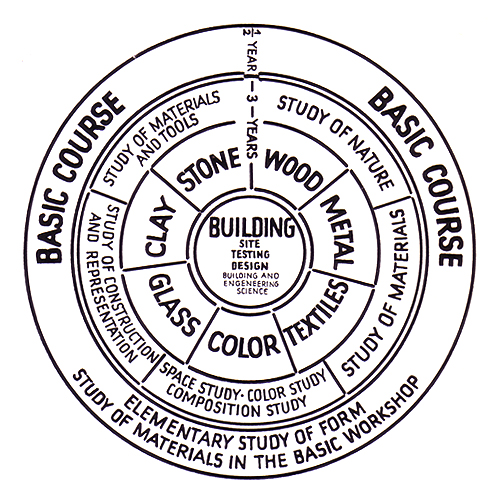
As I continue to prepare for my teaching roles this fall, I'm drawn back to my own experiences of learning design. I recall focusing one investigation on the Bauhaus as I was drawn to its obvious articulation of curriculum and pedagogy (the diagram above provides a visualized overview of this).
When you consider all that you've learned, what do you think young designers should know in order to be equipped for these times? If we look at the model of the Bauhaus, what should a one year "basic course" entail in 2010? If you could go back to school this fall, what would you focus on or improve?
Update: I just finished reviewing Johannes Itten's book and came across this detail that is worth mentioning if we are to consider what could be adapted for a basic course in this day and age. Since he was tasked with setting up the Basic Course, his three aims are valuable insights into this dialogue:
1. To free the creative powers and thereby the art talents of the students. Their own experiences and perceptions were to lead to genuine work. The students were to free themselves gradually from dead conventions and to take courage for work of their own.
2. To make the students' choice of career easier. Here the exercises with materials and textures proved a valuable aid. In a short time each student found out which materials appealed most to him; whether wood, metal, glass stone, clay or yarn best stimulated him to creative activity. Unfortunately, at that time we lacked a workshop for the Basic Course in which all fundamental skills, such as planing, filing, sawing, bending, glueing, and soldering, could be practiced.
3. To convey to the students the fundamental principles of design for their future careers. The laws of form and color opened the objective world to the students. In the course of the work the objective and subjective problems of form and color were integrated in so many ways.
Notably, he also started each class by including exercises to prepare the students physically and mentally (relaxing, breathing and concentrating): "The training of the body as an instrument of the mind is of the greatest importance for the creative man."
02 September 2010
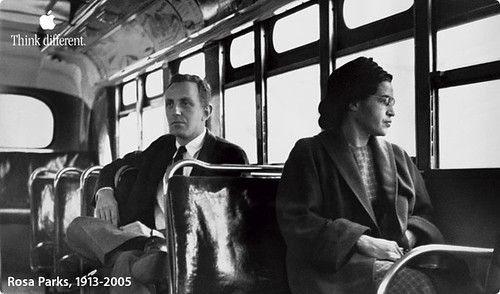
In the spirit of working through a list of questions before we design, I thought this inquiry might also prove beneficial. If we want to design for people outside of our context and culture, should we be asking these types of questions? What would a design outcome look like if we investigated even one of these differences in our design process?
66 Ways We Differ:
1. How we define "proper" behavior
2. How and when we greet each other
3. What's considered common courtesy
4. What's polite or impolite
5. How closely we stand to each other
6. The holidays we celebrate and how we celebrate them
7. How we show respect and disrespect
8. How and why we use money, credit and bartering
9. The range in which we negotiate
10. What is modest or risqué
11. What is embarrassing or shameful
12. What makes us feel good, and what depresses us
13. What makes us proud and what shames us
14. What, when and how we eat and drink
15. What we wear, and when and where we wear it
16. How we see and behave toward sickness and health
17. How and when we seek and use health services
18. What we find funny or sad
19. How and when we use means of transportation
20. What we buy and sell, and when, how and with whom we do it
21. When, where and how we sit and stand
22. If, how and when we touch each other
23. What we believe
24. What we value
25. What makes "common sense"
26. What are worthwhile goals in life
27. What is beautiful or ugly
28. The nature of God and other religious beliefs
29. What we believe we need and don't need
30. Whether privacy is desirable or undesirable
31. Who makes decisions and in what circumstances
32. Whether a person is in control of his or her own life and whether fate determines it
33. What should be communicated directly or indirectly
34. What or who is clean or dirty
35. What language, dialect and tone of voice we use
36. To whom we speak and to whom we do not speak
37. The role of the individual
38. The roles of men and women and how they should each behave
39. The roles of parents and children and how they should each behave
40. The importance of harmony in a group
41. The importance of competition between individuals
42. Social class
43. Educational levels
44. Hierarchy in business relationships
45. How time is understood
46. Whether schedules are important or unimportant
47. The importance of tradition and rituals
48. How often we smile, who we smile at and what it means when we smile
49. How strangers interact
50. How we interact with a person in authority
51. How we interact with a person serving (e.g. in a restaurant)
52. Relationships and obligations between friends
53. Relationships and obligations toward extended family and relatives
54. Facial expressions and other nonverbal behavior and gestures and when they are used
55. Crowd or audience behaviors
56. The importance of preparing for the future
57. How we see old age and how we value elders
58. Whether conversation should be formal or informal
59. What should be said and what should be left unsaid
60. Whether, when, how and with whom we make "small talk"
61. How we perceive what is friendly or unfriendly
62. How open or guarded we are with information
63. What behavior is ethical and what behavior is not ethical
64. How, whom and how much we entertain
65. How or whether we take turns, stand in line, etc.
66. How often we change jobs or move house and where and why
Source: Global Competence: 50 Training Activities for Succeeding in International Business, Jonamay Lambert, Selma Myers and George Simons, Editors, Amherst, Mass: HRD Press, 2000.
26 August 2010

We all get asked about what we do. Sometimes we get asked how we arrived at the place where we really knew what we wanted to do (a common inquiry from my students). This less than ideal image represents a moment when I began to get a feel for how I might answer this question.
Please note: I wasn't fresh out of high school and I hadn't just received my undergraduate degree. If I'm totally honest, I was feeling pretty discouraged and wanted to find a way to see the world differently. The camera forced me to do this by virtue of putting the world into a frame.
This moment helped me to identify one thing I really like to do:
Observe.
I now call myself a design researcher* (for the sake of identification) but if I distill this notion down, it comes back to being someone who observes and investigates. These observations can take various forms: people, places, systems or experiences. I use these observations to help me design things more effectively and/or appropriately.
It is one thing to talk about what you do. But in my own career journey, I've also been interested to know how someone actually does what they do. In light of my pursuit of this path, I have been developing a "toolkit" that I can draw from in order to do this observing well. So I figured it might be valuable to document the tools/resources that I use when I do what I do. I'll write more in the coming weeks about items or ideas I have found useful.
#1. CAMERA
Since I opened this post talking about cameras, it seems an obvious tool with which to start. I currently use a DSLR and an iPhone (but as you can see from the above image, have also used a point and shoot). A higher quality video option is next on my list of acquisitions so if you have any recommendations, let me know. Flickr is one place where I can store/share these observations (but I give the disclaimer that if you are working on observing for a client, you'll want to ensure you've considered things like informed consent when it comes to showing your imagery).
I've also considered how I can allow others to be the observers of their own experiences. In this case, I've used a single use film or point and shoot digital camera to enable others to participate in the research. I've done this so I can actually get out of the way (because being an observer doesn't always equate to being invisible and sometimes, this can actually be a distraction).
Which kind of camera should you acquire? From my experience, this will depend on the context you find yourself in. If you're a travelling researcher, you may need to factor in easy of use and weight considerations. If you're researching on a topic that requires something more elaborate, you may find yourself with a more significant set of gear.
More to come.
---
*IDEO provides a definition of how they interpret this role which resonates with me:
"Design Researchers lead teams through inspiration-gathering and people-understanding experiences to uncover stories and insights that help guide design and innovation. In addition to being empathetic, creative, and strategic, here are some of the qualities we’re searching for:
Passionately curious – People who are excited to be in the field and as inquisitive about other people and their stories as they are empathetic.
Captivatingly articulate – Compelling storytellers who can get people out of their seats and bring tears to their eyes.
Provocatively thoughtful – People who can challenge conventions and inspire teams and clients to translate keen observations into compelling ideas.
Sensorially inspired – People who are inspired by emotions and engaged in all of the senses."
10 August 2010

The UBC students I worked with this summer finished off their project by recalling the ideas we considered at the start of our time in Rwanda. The top image is the word they would use to describe their feelings at the end and the bottom image shows what they felt when they first arrived. Love this!

(Top photos courtesy of the students and bottom photos were taken by me)
04 August 2010

I'm thrilled to see (and participate in) the launch of openIDEO as it reinforces the concepts covered in the Design For Social Change course and pursues similar ideas that were developed when creating Dinner With A Side of Design. From inspiration to evaluation, diverse groups can collaborate together on tough challenges with the aim of actually participating in the process of solving the posed problems. I am keen to see how it will develop and grow over time and am encouraged to see a platform that doesn't just talk about the big issues facing us but also provides the means to tangibly respond with our collective insights.